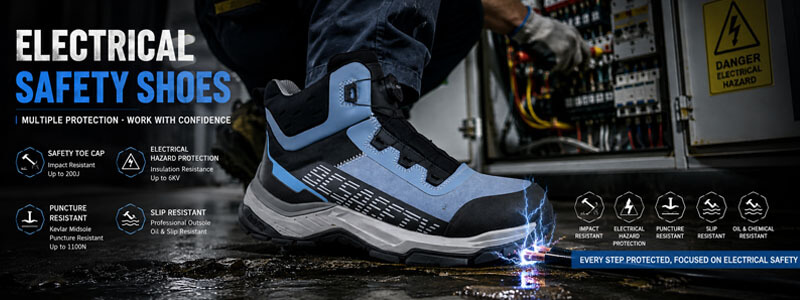

Some New Balance safety shoes carry an electrical hazard (EH) rating, which gives secondary protection if you accidentally touch a live circuit. It does not make you safe to work on live equipment. Think of it as a backup layer, never a primary defense.
Electricians and maintenance technicians should confirm the rating on the exact pair they buy. This guide explains what EH means, how it differs from other ratings and what else to check.
Key Takeaways
- EH is a backup protection, not a replacement for insulated tools and gear.
- Composite toes avoid adding a conductive metal cap.
- Wet, cracked or worn soles reduce protection.
- Always verify the label on your specific model.
- Proper lockout and testing procedures stay mandatory.
What the EH Rating Means
An EH-rated sole is built to resist electrical current under set test conditions. It is designed to reduce the chance of current passing through your body to the ground if you contact a live source.
The key phrase is “secondary protection.” The shoe helps only when your foot is the ground path, and only when the sole is intact and dry.
What It Does Not Do
An EH rating does not protect you if you touch two live points at once. It does not work if the sole is soaked or damaged. It also does not replace safe work practices.
Treat the rating as one layer in a system that includes insulated tools, gloves, testing equipment and lockout procedures.
Why Composite Toes Suit This Work
Metal caps conduct electricity and temperature. A non-metal composite cap avoids adding a conductive element near your toes.
Many electricians choose composite for that reason, along with the lighter weight on long days. To see how this brand labels and builds these models, this resource on New Balance safety shoes explains the main options.
Features Worth Having
| Feature | Why It Matters |
| EH rating | Backup protection against accidental contact |
| Composite toe | No conductive metal cap |
| Slip-resistant sole | Job sites are rarely clean |
| Flexible forefoot | Kneeling and crouching are constant |
| Cushioned midsole | Ladders and long days strain feet |
| Secure heel | Prevents slipping on rungs |
Care Matters More Than You Think
Electrical protection depends on the condition of the sole. A few habits help.
- Keep soles dry before working near live equipment.
- Remove metal shavings, nails and debris from the tread.
- Inspect for cuts, cracks or embedded objects.
- Replace shoes when the sole is worn through or damaged.
Common Mistakes Electricians Make
Relying on the shoe alone. The rating supports safe practice. It does not replace it.
Wearing worn-out pairs. Damaged soles can break the protective layer.
Skipping the label check. Not every safety shoe is EH rated, even within one brand.
How to Check Before You Buy
- Read the label inside the tongue.
- Confirm the EH marking is listed.
- Check the toe type and slip rating.
- Ask your employer about any extra requirements.
Frequently Asked Questions
Can I wear EH shoes on live circuits?
No. They offer backup protection only. Follow lockout and testing procedures.
Do EH shoes stay protective forever?
No. Wear, moisture and damage reduce effectiveness, so replace them regularly.
Final Word
Buy for the rating, then keep the shoes in good condition. Protection only works as well as the sole under your foot.
Author Bio: [Author Name] writes about electrical safety and protective equipment for tradespeople. They explain ratings and standards so readers can buy with confidence.